01
Know what you can claim before you buy
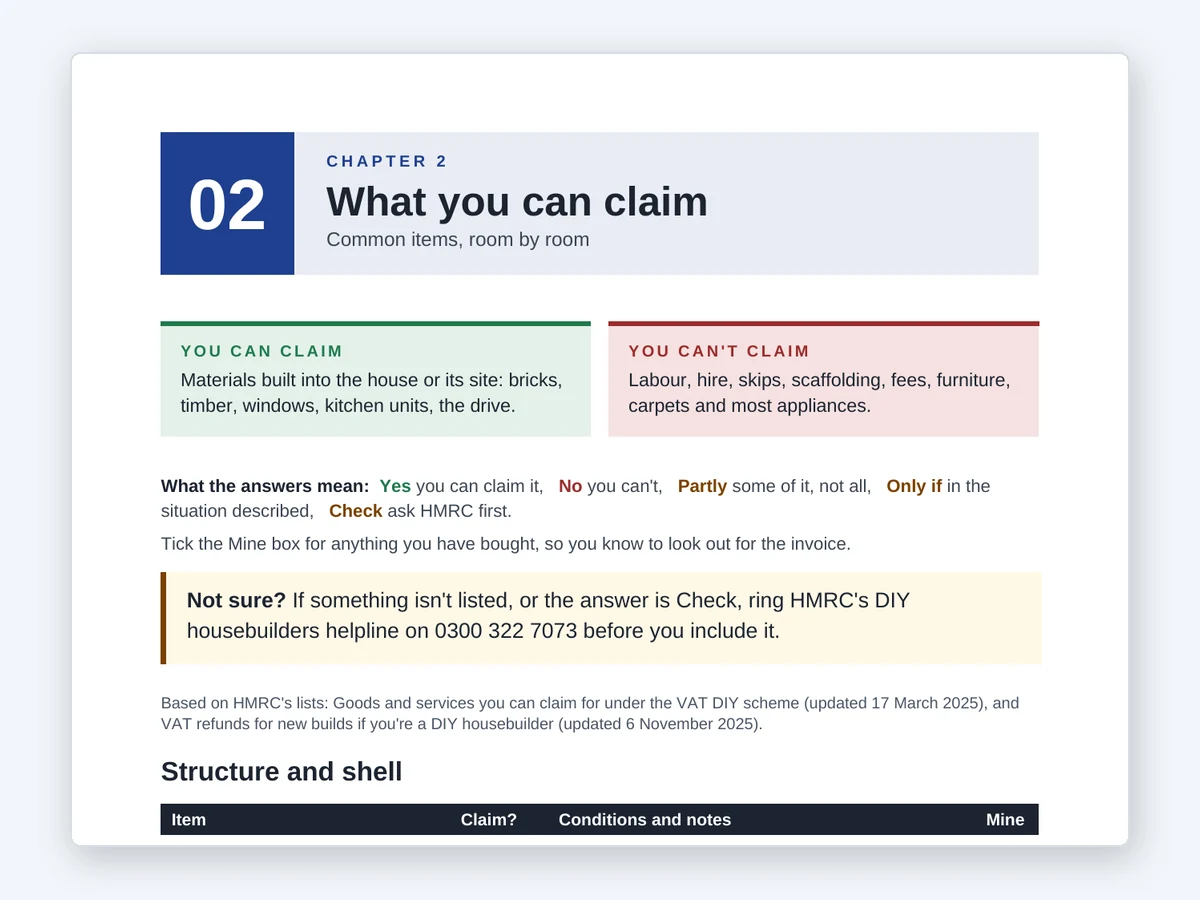
The guide lists over 120 common items, room by room, with a clear Yes, No, Partly or Only if for each and the reason why, based on HMRC's own guidance.
Property and building
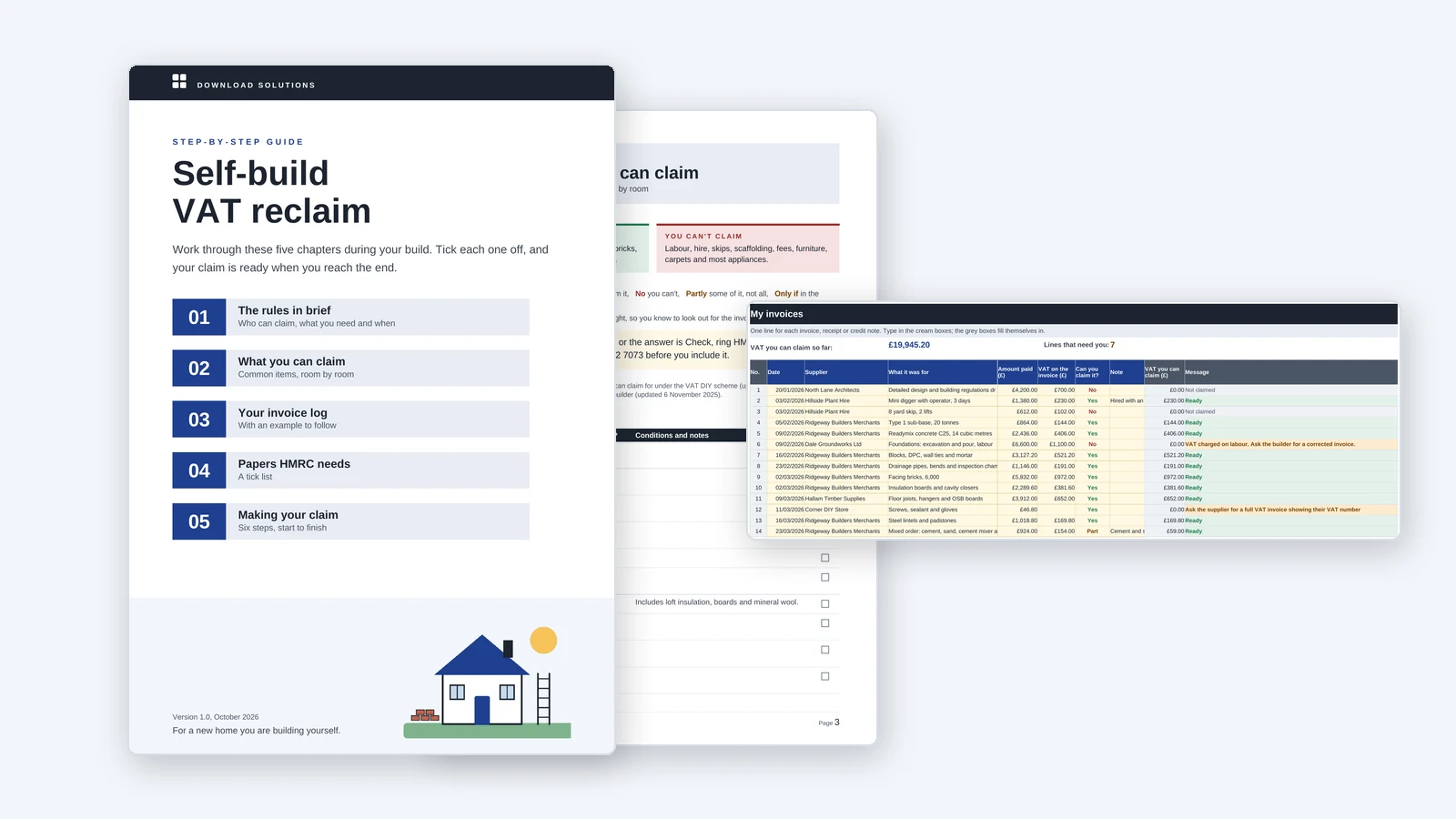
A step-by-step guide to claiming back the VAT on your new home, with a simple tracker that does the sums and sets out your invoices the way HMRC asks.
£29.00
Buy and downloadFor customers in the UK only.
One-off payment. Instant download, with the link emailed to you. Digital product, nothing is posted.
Word (.docx), PDF, Excel (.xlsx). Not yet tested on a Mac or in Google Sheets. Read the limitations before you buy
The problem
Under HMRC's DIY housebuilders scheme, you can claim back the VAT on building materials for a new home you build yourself. But you get one claim, and for a home completed on or after 5 December 2023, you must make it within six months of completion. By then the paperwork runs to hundreds of merchants' invoices, receipts and credit notes, scattered across email inboxes, the van and the kitchen drawer.
HMRC only refunds VAT that was charged correctly, on a proper VAT invoice, for something that counts as a building material. A till receipt with no VAT number, a builder who charged VAT on labour that should have been zero-rated, a wardrobe that counts as furniture: each is a line HMRC can strike out. And for an online claim, HMRC asks for every invoice in its own spreadsheet template.
01
The guide lists over 120 common items, room by room, with a clear Yes, No, Partly or Only if for each and the reason why, based on HMRC's own guidance.
02
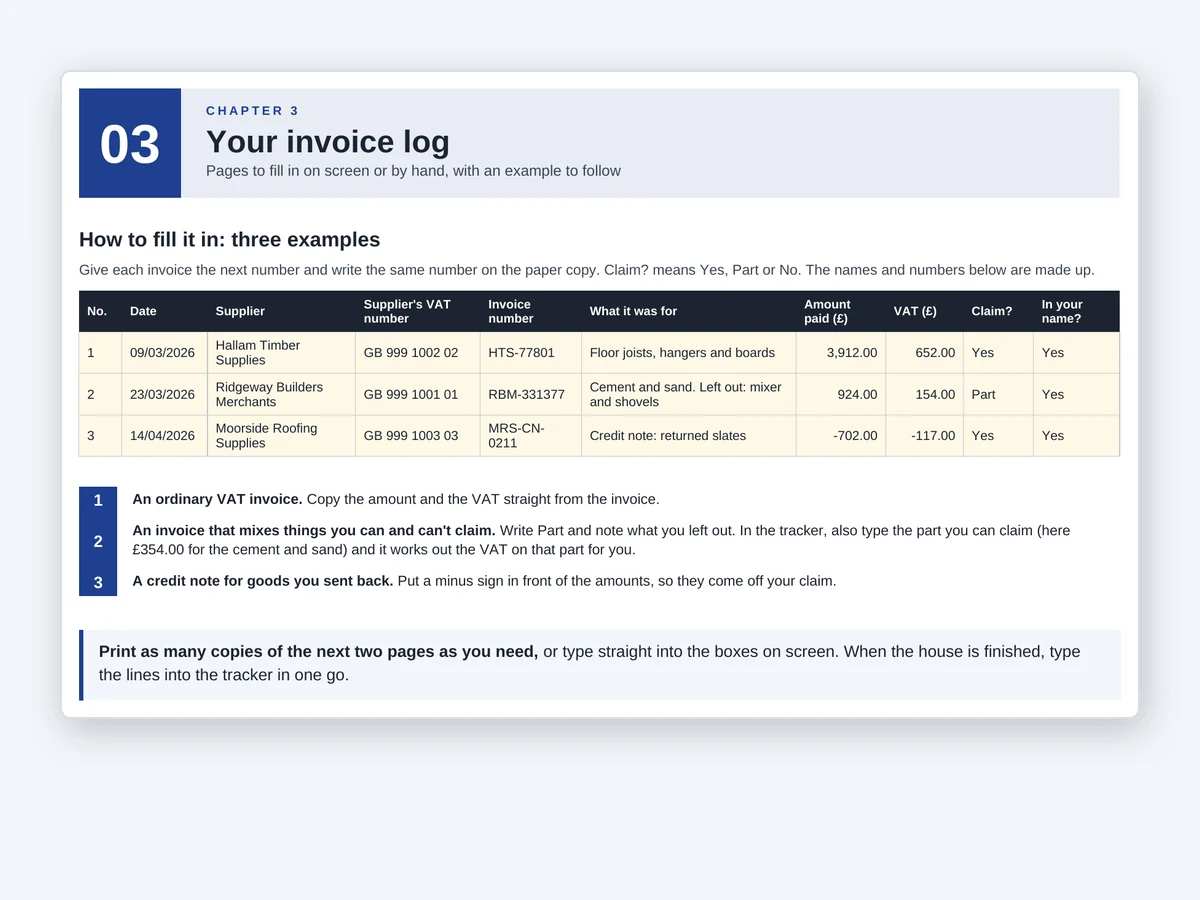
Write each invoice in the printed log as it arrives, or type it straight into the tracker. A worked example shows exactly how to record an ordinary invoice, a mixed one and a credit note.
03
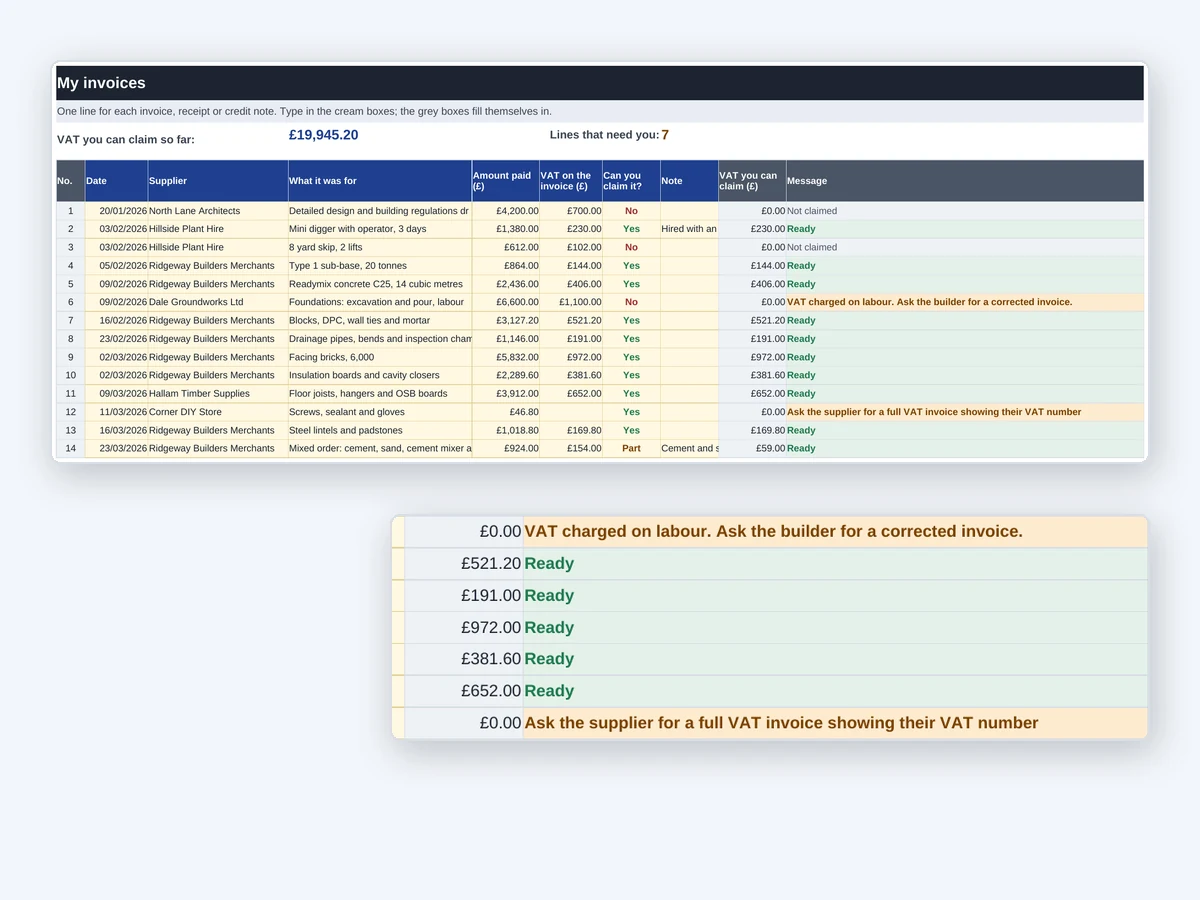
The tracker checks every line and tells you in plain words what needs doing, such as asking a shop for a proper VAT invoice, or asking a builder to correct one.
04
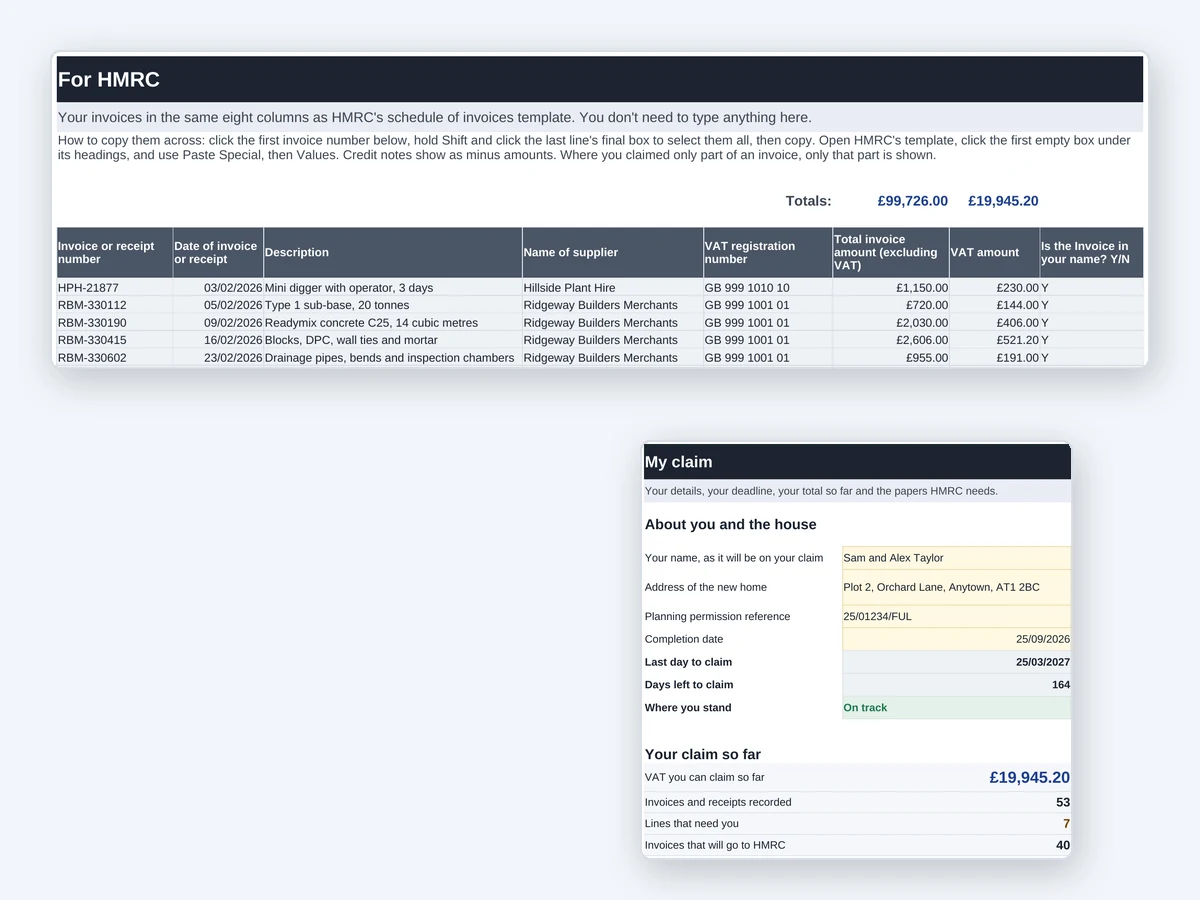
The tracker counts down your six months and sets out your invoices in HMRC's own columns, ready to copy across. The guide's tick list and six steps take you through sending the claim.
Word (.docx), PDF, Excel (.xlsx). Not yet tested on a Mac or in Google Sheets. Version 1.1, last updated 18 October 2026.
No. Everything you need is in the guide, which you can print and fill in by hand during the build. The tracker saves you work at the end: for an online claim, HMRC asks for your invoices in its own spreadsheet template, and the tracker sets them out ready to copy across. Chapter 5 of the guide walks you through it.
As early as you can. Recording invoices once a week takes a few minutes, and problems are easier to fix while the supplier still has the order on file. If you've already finished, it works just as well for sorting a box of invoices; it just takes longer.
No. You make the claim yourself, free, using HMRC's online service or its paper form VAT431NB. The guide shows you how, and the tracker prepares the invoice list and totals.
Mark the invoice as Part and record the amount you can claim, with a note of what you left out. The guide's worked example shows how.
On a new build, a VAT-registered builder who supplies and fits materials should zero-rate the whole job, so there's normally no VAT for you to claim. If they did charge VAT, ask them to correct the invoice, because HMRC won't refund VAT charged in error.
Yes. The DIY housebuilders scheme applies across the UK.
One-off payment. Ready to download straight away, with the link emailed to you.
£29.00
Buy and download